

In 1914 a new concept in printing was implemented at the Bureau of Printing and Engraving. Bureau employee, Benjamin Stickney was the inventor of the rotary press. Like the flat plate process, the rotary press used engraved plates. The big difference was that these plates were curved, with two plates curved onto a circular core. This allowed for printing on a continuous roll of paper, referred to as the web. Presses were in two sizes. A smaller press for smaller, narrower plates was used for the coil stamps. While it cannot be said the press was developed for coil stamps, it can be argued that the demand for coil stamps and the expense producing them provided an urgency that contributed to development. The press became the workhorse for stamp production during the first half of the twentieth century saving 50% of the cost of older methods. The Stickney press was used by the Bureau until the last press was retired in 1962.
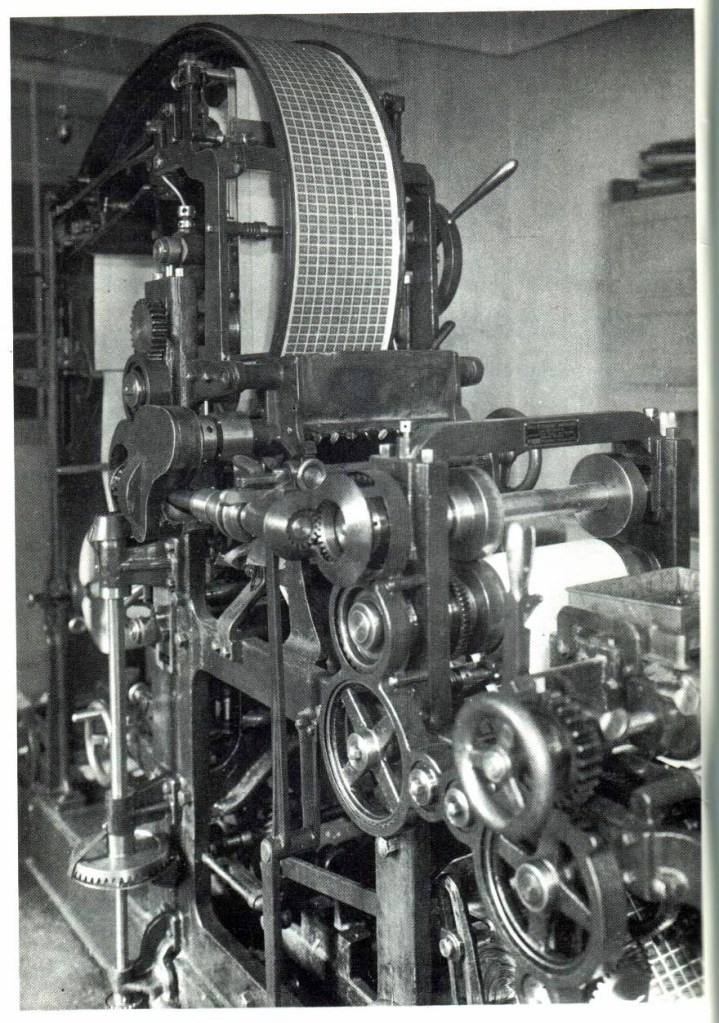
For members of the United States Stamp Society, refer to the multi-part article by Louis Repeta, “The Stickney Rotary Press” Part I appeared in 1996 in the United States Specialist, Volume 67, Number 2.
 The 10c Coil Stamp From the Presidential Series of 1938